By Kate Seaton
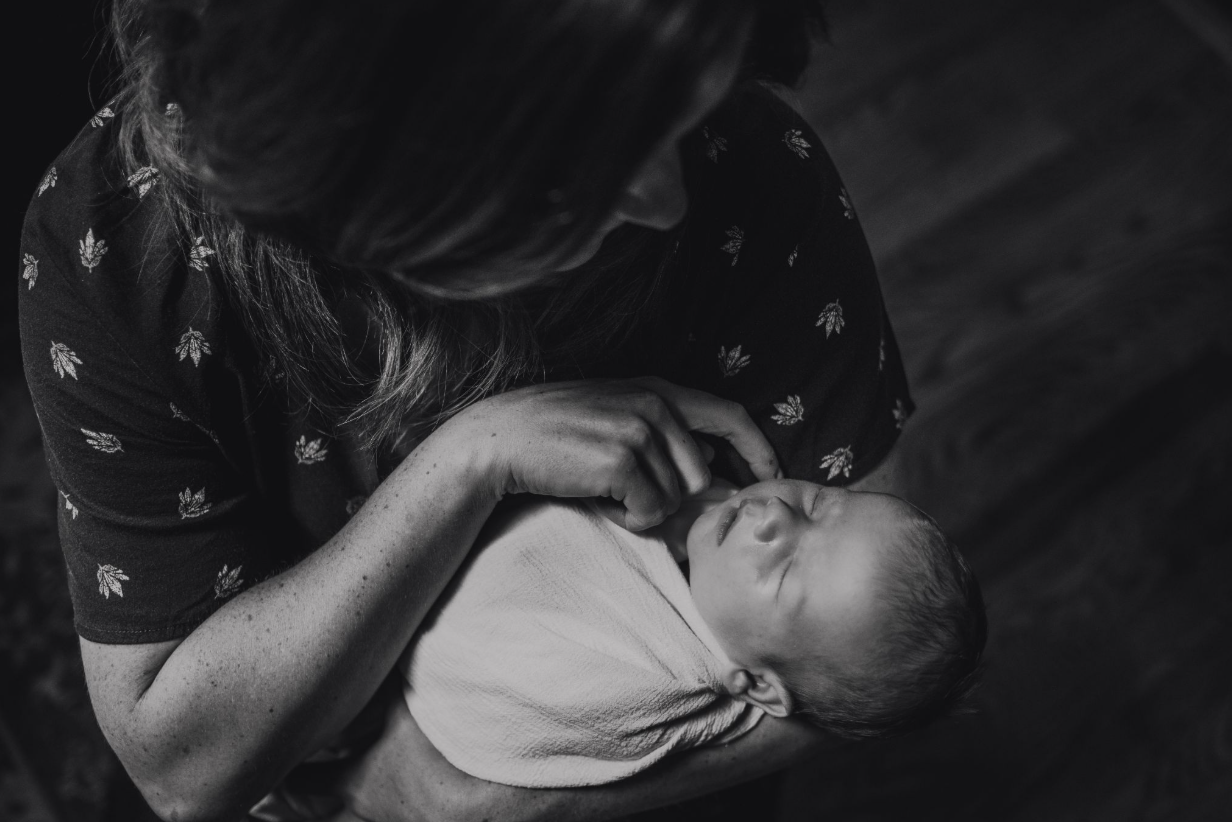
There’s a question many postpartum mothers are asking, either silently in their minds or out loud to the people closest to them: Is it supposed to feel this hard?
As a matrescence doula and a mom of two, I know something about the depths that postpartum can carry you to, and I’ve seen patterns in the experiences of the mothers I support. Today I’m sharing the matrescence wisdom that makes postpartum women sigh in relief and embrace the sacred journey that is matrescence.
Here’s what I want every postpartum mother to know:
Disorientation and grief are a normal part of matrescence. Despite the cultural story of motherhood being instant bliss, early motherhood is demanding and often disorienting and overwhelming, and in our culture, mothers and families are very under supported. It’s not only normal to be overwhelmed, it’s also normal to grieve the life and person you were before. It’s more than okay to feel more than just joy and gratitude. Many mothers do.
It’s also okay if your matrescence doesn’t feel heavy. Matrescence can bring a feeling of being more connected to yourself, your values, and your creativity, among other things. Matrescence doesn’t have to follow a certain arc or be a struggle for it to be happening to you and meaningful in your life. No matter how matrescence presents for you, it’s worth honoring and acknowledging what it asks of you and gifts to you.
Matrescence unfolds over years, not weeks or months. Feeling embodied in the role of mother often takes years of learning and becoming. It’s a learn-by-doing experience that can’t be rushed and should be honored for the sacred transformation that it is. You don’t need to feel like you’ve arrived by 6 weeks, 6 months, 1 year, 3 years, or any other milestone. Trust your path and give yourself grace as you learn by doing. Every mother has had to do the same.
This is the first time in human history we’re trying to mother on our own. Many modern mothers are initiated into motherhood while living away from family or without daily support, and the nuclear family puts all the caregiving on the mom and a partner if there is one. That means modern mothers are moving through postpartum without the care and community that has supported women through the transition to motherhood throughout time. So if you find yourself feeling overwhelmed, remember: you were never meant to do it all alone. Accepting any support you have access to is a gift to your baby and entire family.
Your pull to Instagram comes from a wise knowing. The part of you craving connection, witnessing, support, and education is the part of you that knows motherhood was never meant to be done alone. The nuclear family plus pace of modern life has left mothers and families on their own with their babies and children for the first time in history, but your desire for connection and support is still there. Without neighbors and friends nearby to turn to, it’s natural that you’d seek witnessing and support from content online. So be gentle with yourself here. And while online content can be connective and supportive, it can also be triggering and harmful. If something you read online makes you feel anxious, triggered, or shameful, try to let it go like you would a toxic person or talk to a friend or supportive person about it. (How to engage with motherhood content is hard and no one has it nailed, BTW).
We’re the first generation claiming maternal wellness. The health of the mother has been ignored for far too long (a story as old as patriarchy), so many mothers feel they will be openly or privately shamed or judged by elders or others for seeking and accepting motherhood support. But just because women before us had to push through and carry it all on their own, doesn’t mean they didn’t need help – or that you aren’t deserving of it. Breaking generational patterns is big work, and one of the best things you can do is surround yourself with people and perspectives that hold that you are deserving of every bit of support you have access to.
Often just reading one or two of these can ground postpartum mothers into the reality that there isn’t anything wrong with them or the way they’re feeling inside of matrescence and motherhood. So much of postpartum struggle is an external, societal problem of under supporting mothers and ignoring their experiences (cue patriarchal rage).
Honoring your matrescence for the transformation that it is can be healing and grounding as you shift body, mind, and spirit from woman to mother. And while that can of course start with you owning the matrescence experience for yourself, I find that having even one other person, outside of your own heart and mind, who can hold that with you offers a different level of validation and support.
Matrescence is an internal transformation. And in a culture that projects the external image of “super moms” and bouncing back and mothers joyfully carrying it all, having company that pushes back on that narrative is often exactly what we need to release the weight and anxiety it causes.
So whether it’s a supportive matrescence-aware friend, blog (like this one or mine), or a matrescence professional, connecting with someone who can hold the depth of your experience is medicinal in a culture that ignores matrescence.
***
If you are looking for guidance or community as you navigate your matrescence, you can find free matrescence support resources at themotherlines.com. I also offer one-on-one matrescence guidance sessions and matrescence mother’s circles in Marin. Learn more at themotherlines.com or reach out directly at kate@themotherlines.com.

About Kate:
Kate Seaton is a mother of two and a certified matrescence doula dedicated to supporting women through the forgotten and sacred transformation from woman to mother. Her work blends matrescence wisdom with feminine reclamation, which she views as vital for women (and all beings) living under patriarchy. She lives in San Rafael with her family and can be reached at kate@themotherlines.com.